Overview
If you want portals, boards, and “what is customer feedback software,” open that hub instead. Stay here when your pain is process: statuses people trust, tags that surface themes, and a calendar-backed triage so the queue actually moves.
User feedback management means an operating playbook. Collect every product-relevant signal into one inbox. Organize with status, tags, and owners. Act by promoting, parking, or routing into Jira, Linear, or ClickUp, then closing the loop so requesters see an outcome.
See user feedback management in the product
Real Votiq screens, not mockups of a different tool.
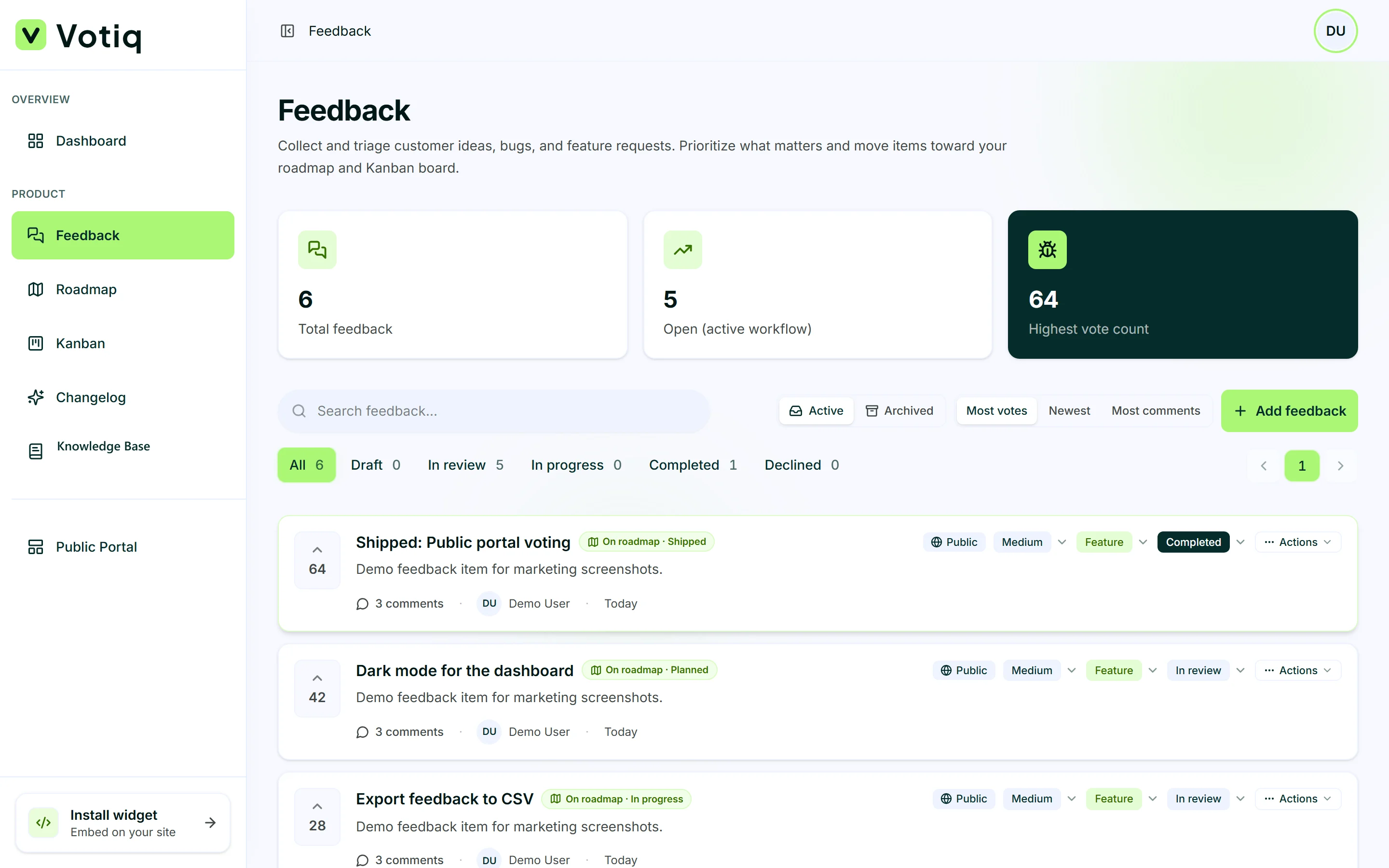
Collect: get every signal into one inbox
Stage one of the feedback lifecycle is collection. An embeddable widget catches friction in context. A portal catches browsing and voting. Support themes that repeat should be logged once in the same feedback inbox instead of living forever in ticket threads.
The rule is simple: if it will influence product decisions, it belongs in the inbox. Side channels that never get triaged are not a process. They are noise.
Act: route, ship, and close the loop
Stage three is action. Promote ready items, keep delivery linked, and mark outcomes so requesters see what happened. Many teams keep decisions in Votiq and push implementation into Jira, Linear, or ClickUp once work is committed.
Closing the loop is part of the lifecycle, not an optional marketing step. When status goes silent after “planned,” people stop submitting useful signal.
PMs who need revenue and segment scoring should open the product feedback platform page. Founders focused on trial churn should open SaaS customer feedback.
Frequently asked questions
Quick answers about how this solution fits SaaS teams evaluating feedback and release tools.
What is user feedback management? +
The practice of collecting user input into one inbox, organizing it with status and tags, and acting until each item has a clear outcome.
What is a feedback lifecycle? +
A repeatable path from collect to organize to act, with statuses that customers and teammates can understand.
Do we need integrations with Jira or Linear? +
Only after a request is committed. Keep triage in the feedback inbox, then route delivery tickets to your engineering tracker.
How is this different from customer feedback software? +
That hub owns the category: portal, boards, and closing the loop. This page owns the weekly inbox and lifecycle-ops workflow for UX, CS, and ops.
When should I use the product feedback platform page instead? +
When the question is PM prioritization by revenue and segment into a roadmap commit, not inbox triage and status hygiene.